What are Flat Pack and Traditional Shipping Containers?
Flat pack containers are made of parts like walls, a roof, and a base. These parts come packed small so they are easy to move. When they arrive, people can put them together fast to make safe and dry rooms. Traditional shipping containers are big steel boxes used to carry goods on ships. Now, people use them for many things like small homes, shops, and storage. They come ready to use and are very strong and long-lasting. Both types help create useful spaces in different ways.
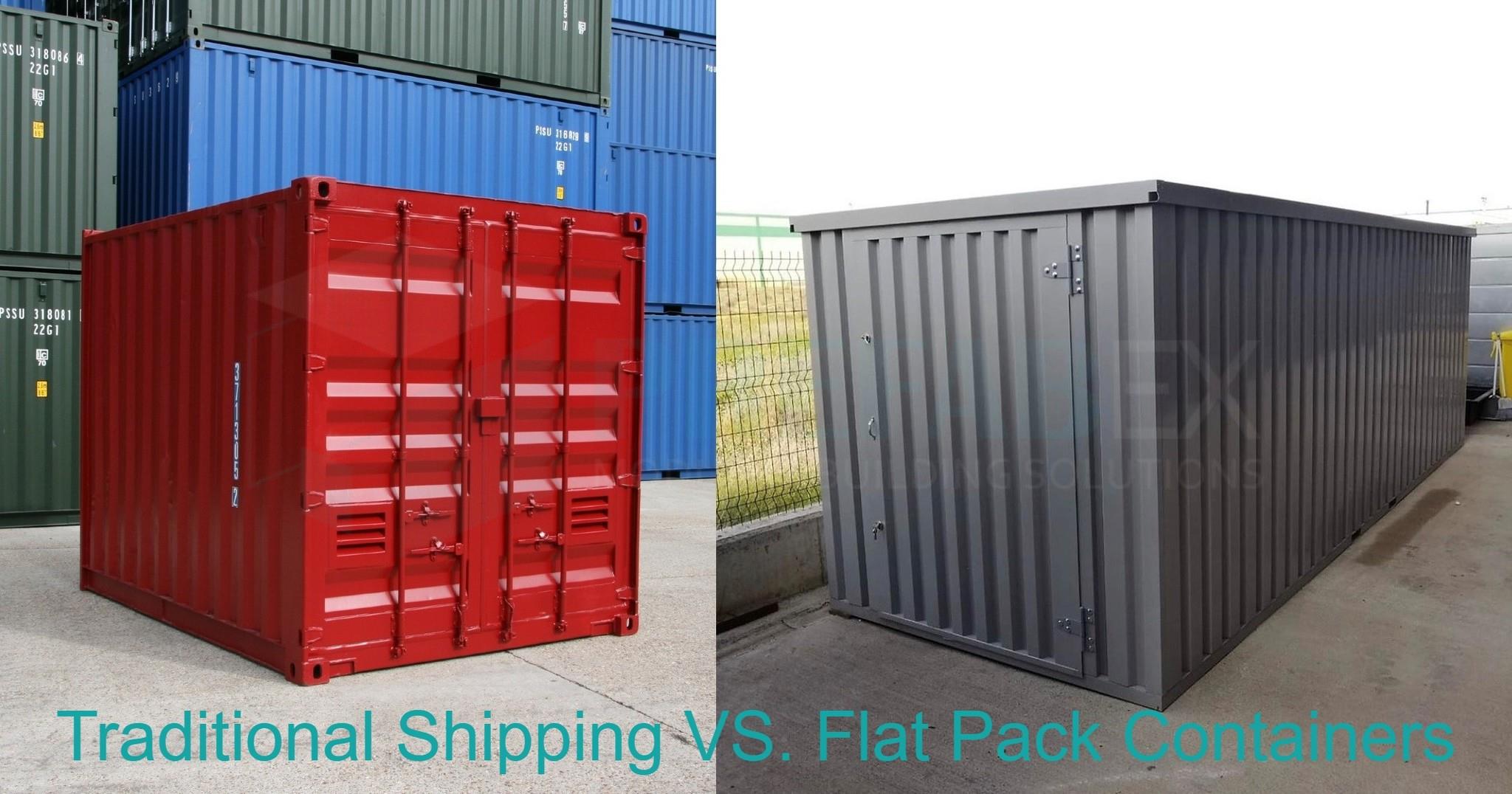
Flat pack containers offer a transport-efficient alternative to traditional shipping containers, with compact delivery, fast assembly, flexible use, and easier deployment for different project needs.
.jpeg)
.jpg)
.jpg)
.jpg)
.jpg)
.jpg)
Transport and Delivery: Efficiency vs Heft
If transportation costs and access are things to think about, flat pack containers are perfect for such projects. These units can fit on a single truck or in a 40-foot container to reduce delivery costs and storage space. This practicality makes them ideal in remote locations or when it is necessary to deploy many units at the same time. In opposition, traditional shipping containers are heavy, which makes transporting them a dilemma as they require cranes and truck to offload. Because they are bulky and rugged, they are costly to move especially in limited spaces.
Assembly and On-Site Setup: Speed or Convenience?
Flat pack containers are very good for assembly. They are made to be put together quickly and easily with simple tools. You do not need big machines. A small group of people can build one in a few hours. This is good for projects that need to move fast or for temporary use. Normal shipping containers come ready to use right away, so you do not need to build them. But if you want to add doors, windows, or make them warm, you need experts and more money.
Customization and Modularity: Flexibility vs Rigidity
Flat pack containers are highly modular and can be combined together. They can be moved or adjusted to match the evolving needs. This adaptability is perfect for dynamic environments as construction sites, events or mobile offices. On the contrary, traditional containers can be modified but their sturdy environment makes it challenging and expensive. Cutting and welding in addition to reinforcing makes it expensive to be turned into a marvelous architectural space and it consumes both time and resources.
Durability and Structural Strength: Temporary vs Permanent Use
Traditional shipping containers are very durable because they are made from thick, corrugated steel. This makes them weather-resistant and secure and can handle heavy loads and tough conditions. They are good for permanent use and heavy-duty work. Flat pack containers on the contrary are made from lighter materials. They are strong enough for normal use but not as tough as traditional containers. For long-term or high-security needs, traditional containers are better because they last longer and are stronger.
Matching Each Container Type to the Right Use Case
Choosing between flat pack and traditional shipping containers depends on how you want to use the space. Flat pack containers are easy to move and build quickly which makes them good for short-term or moving uses like offices, clinics, shelters, or storage. They are easy to move and build quickly. Traditional shipping containers work better for long-term use. They are strong and safe, so they are good for homes, workshops, or shops. These containers can handle tough weather and can be changed a lot to fit your needs.
Budget and Cost Considerations
In the comparison between flat pack containers and traditional containers, flat pack ones are budget friendly at the initial. Because they are modular they cut down transportation and labor costs and allow you to scale up your space without paying a lot. Traditional containers are more expensive in terms of transportation and modifying the units but they offer better quality in the future. What matters the most here is how long are you using the units and how much customization do you need.
Environmental Impact: A Greener Choice?
Flat pack containers are good for the environment as they are small and easy to stack, which helps reduce carbon footprint during transport. They are also quick to put together, which means less mess on site. Traditional shipping containers can also be eco-friendly because they reuse old steel containers. However, changing them needs a lot of energy for welding and insulation.
Making the Right Choice for Your Project
Choosing between flat pack containers and traditional shipping containers depends on your project needs. Flat pack containers are easy to move and quick to set up which makes them suitable for short-term needs and cost less at first. Traditional shipping containers are better for long-term use due to their strength and safety. You can change them a lot to fit your needs. It is recommended to think about how long you need the container and where you will use it so you can choose the right one for your needs.
Prefabex: Direct Manufacturer of Flat Pack Containers
At Prefabex, we specialize in the production of high-quality flat pack containers designed for efficient transport, easy assembly, and long-term durability. These containers are ideal for storing tools, equipment, documents, or materials in construction sites, warehouses, events, or remote locations.
Our flat pack storage container products are made with galvanized steel panels, secure locking systems, and weather-resistant coatings to ensure protection in any environment. Delivered in compact form, they can be assembled in minutes and relocated just as quickly—making them a flexible, space-saving storage solution.