Modular Restroom Buildings vs. Portable Toilets: What’s the Difference?
Introduction: The Evolution of On-Site Sanitation
Clean and easy-to-use toilets are important everywhere whether at building sites, parks, festivals, or places far away. Not all toilets are the same. In the last ten years, new ways to build toilets have helped create modular restroom buildings. These restrooms are modern, clean, and good for the environment. They are better than old portable toilets. Both help with on-site sanitation, but they are very different in how they are made, how strong they are, how comfortable they feel, and how good they are for a long time. This article will explain the main differences between modular restroom buildings and portable toilets. This will help you choose the best one for your place or project.
These sanitation solutions are part of complete modular restrooms solutions developed for efficient hygiene infrastructure, flexible site operations, and high-performance sanitation environments, offering durable and scalable alternatives to traditional systems.
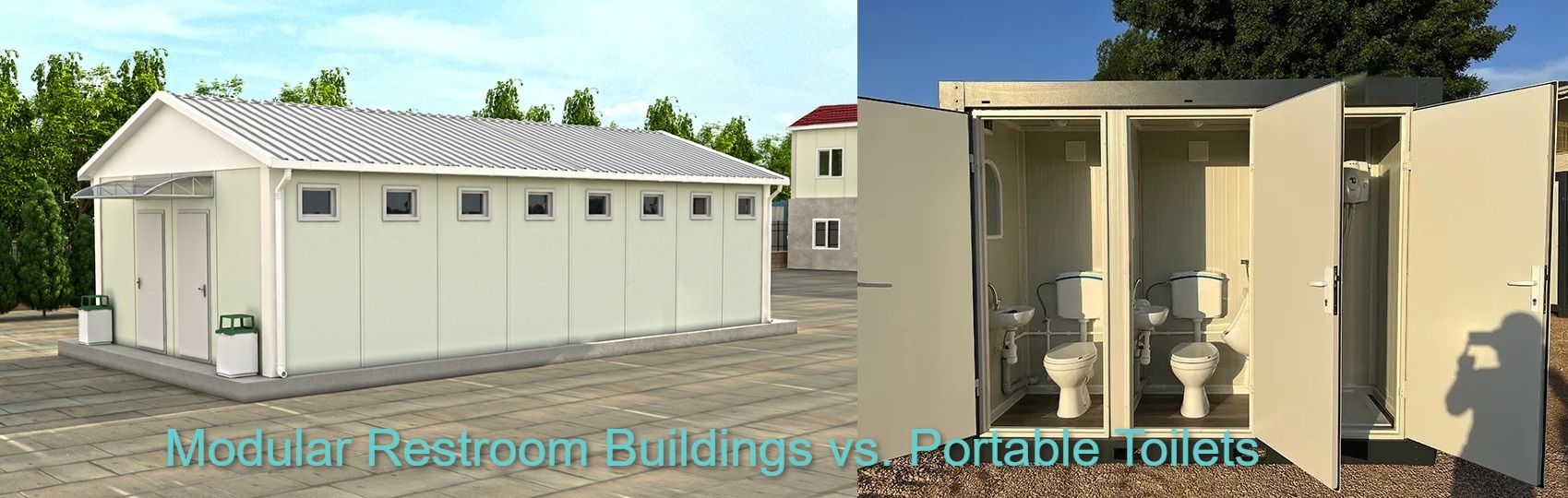
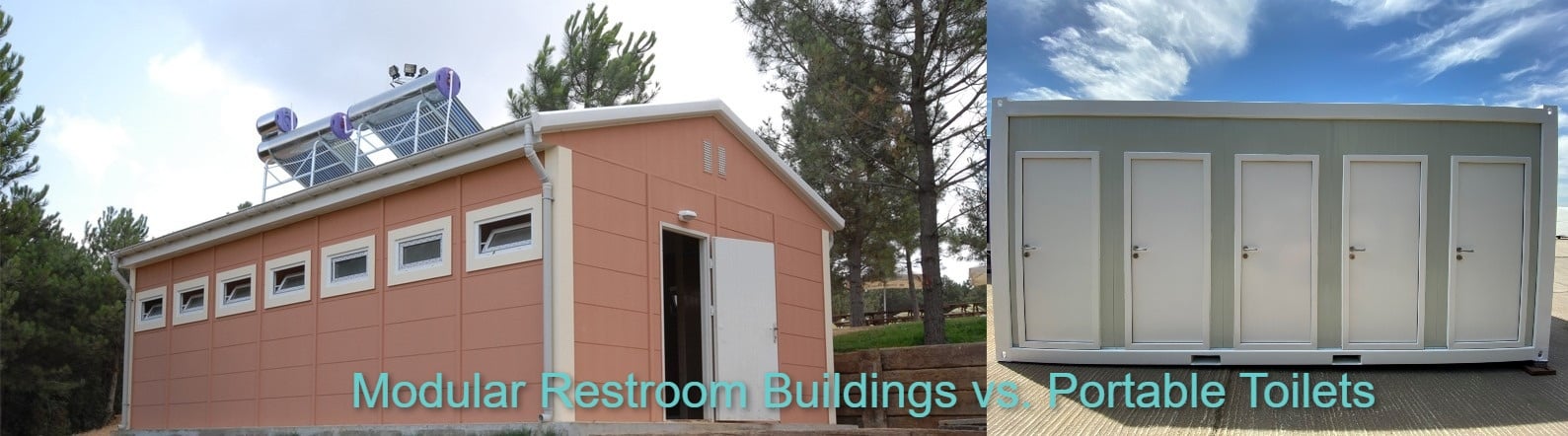
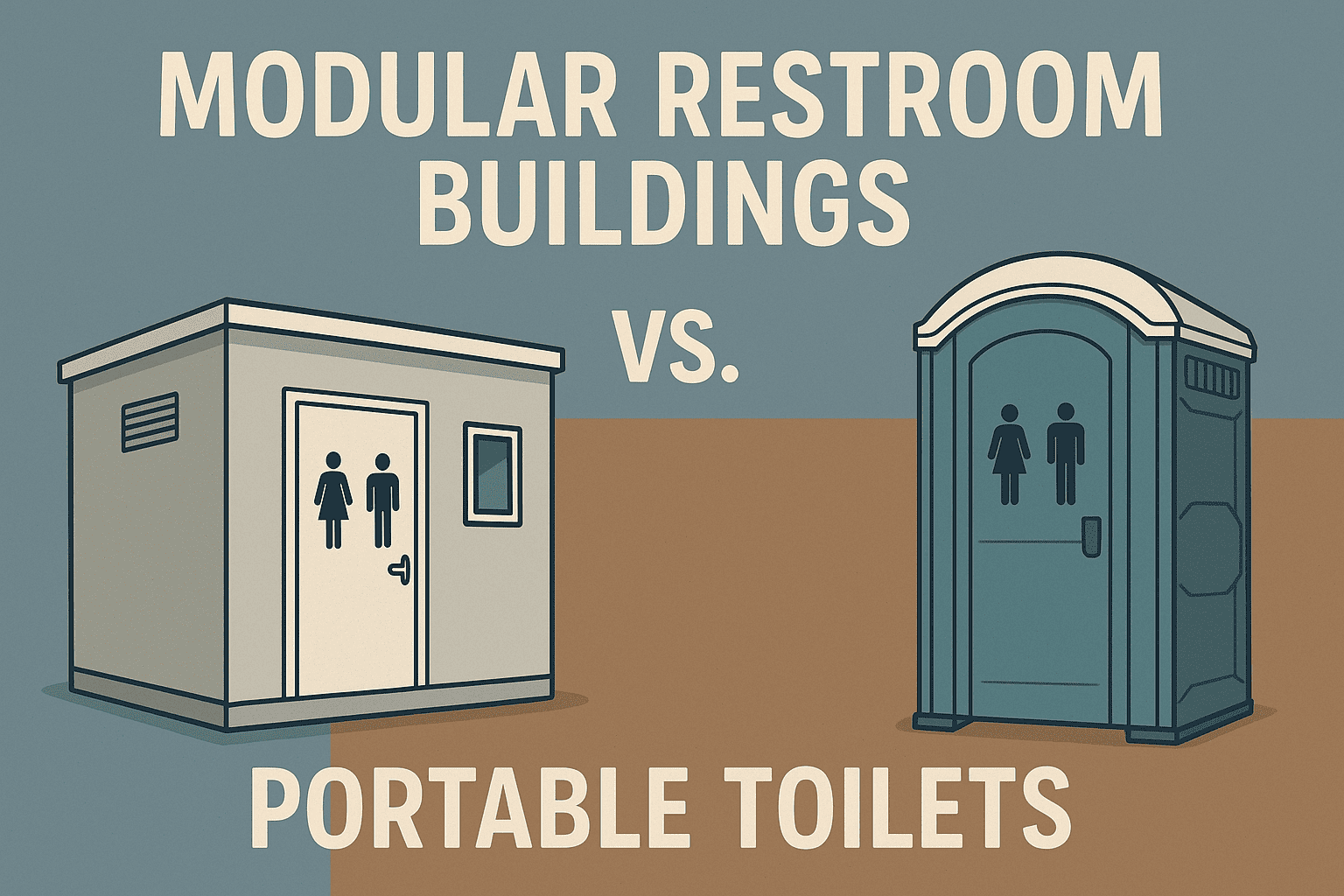
.jpg)
.jpg)
.jpg)
.jpeg)
.jpeg)
.jpg)

.jpg)
.jpg)
.jpg)
-
Understanding the Two Sanitation Solutions
What Are Portable Toilets?
Portable toilets or chemical toilets, are small, light toilets made from plastic. People use them for a short time and you can see them at building sites, festivals, or outside events.
Features of Portable Toilets:
- One small unit made from plastic
- Use chemicals to treat waste
- Do not need water pipes or electricity
- Easy to move and set up
Portable toilets are easy to use for a short time. But they are not very comfortable. They have less fresh air and are not as clean for long or busy use.
What Are Modular Restroom Buildings?
Modular restroom buildings are made in factories with special building methods. They come with water pipes, air flow, and electricity. They are moved to the desired location for assembly. These restrooms mix the easy move of portable toilets with the comfort and quality of normal bathrooms. They are better for long use.
Features of Modular Restroom Buildings:
- Made with strong steel frames and insulated walls
- Have running water, flush toilets, and sinks
- Can have air conditioning, lights, and access for everyone
- Made to last, be comfortable, and stay clean
- Can be used for a short time or many years
The Construction and Design Differences
Modular restroom buildings are made from strong materials like steel and insulated panels. They can handle heavy use, bad weather, and changes in temperature. They often have concrete or steel floors, thick walls, and strong roofs to keep the inside nice. They come with water pipes, electricity, lights, and good air flow to make them as nice as indoor bathrooms. Portable toilets are made from light plastic. They have one piece with a seat, a chemical tank for waste, and a small air pipe. They do not have water pipes, electricity, or running water. This makes them quick to move and place but less comfortable and less clean for long use. Modular restroom buildings are made for long-term use. Portable toilets are for short, quick use.
Installation, Mobility, and Use
Modular restroom buildings can be put together much faster than normal buildings. This helps get toilets ready quickly on site. The key differences between modular restrooms and portable toilets include installation, infrastructure needs, user experience and suitability for different environments:
- Installation and Setup:
Modular restrooms are mostly built in a factory and require a prepared site foundation with utility like water, drainage and power for quick on-site assembly, usually just a few days. Portable toilets need no utilities, foundation, or professional installation as they can be delivered and used immediately by a single truckload.
- Infrastructure Requirements:
Modular restrooms depend on basic infrastructure like running water, drainage, and electricity to function. Portable toilets operate independently, using chemical tanks that neutralize odors without any external connections.
- User Experience and Comfort:
Modular restrooms provide a clean, well-lit, climate-controlled environment with real toilets, sinks, mirrors, hand dryers, touchless faucets, and proper ventilation. They often comply with ADA standards for accessibility. Portable toilets are functional but minimal, lacking running water, ventilation, and amenities. They depend on chemical treatments for odor control but can become unpleasant and unhygienic if not regularly serviced.
Hygiene and Comfort: A World of Difference
The ventilation and durable, easy-to-clean materials in modular restrooms help maintain hygiene and comfort, making them suitable for long-term or high-traffic use. Portable toilets require frequent emptying and maintenance, and without it, they can quickly degrade in cleanliness and user experience.
Use Cases:
Portable toilets excel where speed, flexibility, and lack of infrastructure are critical such as outdoor festivals, remote sites, or emergency responses. Modular restrooms are better suited for environments needing reliability, comfort, and higher sanitation standards over a longer term like parks, schools, workplaces, or events expecting sustained use.
Maintenance and Durability
Modular restroom buildings do not need a lot of care. They are made to last a long time. Their surfaces don’t rust, get wet, or break easily. They connect to city sewers or use tanks on-site. Inside, the floors are safe and easy to clean. With regular checkups, these buildings can last up to 30 years and sometimes more. Portable toilets need care often. They have to be emptied and cleaned daily or weekly. They hold only a small amount of waste and use chemicals to stop bad smells. Sun and weather make their plastic weak, so they last about five to eight years. In the long run, modular restrooms cost less and are better for any place that needs toilets for a long time.
Scalability and Capacity
Modular restroom buildings can serve many people. They have many stalls, sinks and urinals. This makes them good for busy places like sports stadiums, factories, or big events. You can add more units or connect buildings easily to make them bigger.
Portable toilets work well for small groups or short times. Each one is for one person only. Using many units at a large event can be hard to manage. More units mean more cleaning and higher costs. For big needs over time, modular restrooms are a better and flexible choice.
Cost and Long-Term Value
Modular restroom buildings cost more in the beginning but save money later. Portable toilets are cheaper to rent or buy first, which is good for short use. But they need cleaning often, chemicals, and transport, which costs more over time.
Modular restrooms need less work and last longer. For businesses or towns planning to use toilets for years, modular restrooms give better value and save money in the long run.
Portable toilets are a short-term expense. Modular restrooms are a smart long-term choice for comfort, health, and cleanliness.
Environmental Considerations
Modular restrooms are better for the environment. They use steel frames that can be recycled and safe materials. They create less waste when made and used. Some have energy-saving lights, solar power, water recycling, and low water use fixtures. This helps protect the planet. Portable toilets use chemicals for cleaning and smell control. These chemicals can harm the environment if not handled well. They also need frequent emptying, which uses fuel and causes pollution. For cities and companies which care about the environment, modular restrooms are a cleaner and greener solution.
Accessibility and Design
Modular restrooms indeed offer superior customization options, allowing for features such as family-friendly facilities, accessible units for people with disabilities, and upscale finishes that align with various architectural styles. Their ability to blend into diverse environments like parks, campuses, and commercial venues enhances both functionality and visual appeal. On the other hand, while portable toilets fulfill basic needs and include ADA-compliant options, their limited design flexibility and heavier, bulkier nature restrict their placement and overall aesthetic integration. So, for settings that prioritize both inclusivity and appearance, modular restrooms stand out as the better solution.
Which Option Is Right for You?
Choosing between modular restroom buildings and portable toilets depends on how long you need them, your budget, and what users expect. Portable toilets work well for short events, emergencies, or places without water and power. They are cheap, fast to set up, and easy to use. Modular restroom buildings are better for long-term use or places with many people, like construction sites, schools, parks, or bus stations. They are cleaner, stronger, more comfortable, and better for the environment. If you want better hygiene, a good public image, and value for money, modular restrooms are the best choice. Sometimes, using both is smart. Portable toilets can help with extra demand or remote spots, while modular restrooms are the main facilities. Together, they make a flexible plan that fits different needs.
The Future of Public Sanitation Is Modular
As cities grow and people care more about the planet, we need better and smarter restrooms. Modular restroom buildings are the new way to provide clean and strong sanitation. They combine quick setup like portable toilets with the comfort and quality of permanent buildings. Portable toilets are good for short or emergency use, but modular restrooms are the future. They are made to last, are good for the environment, and help people stay comfortable. You find modular restrooms in busy parks, schools, work camps, and event spaces. They keep up with modern needs. In short, portable toilets are a short-term fix, but modular restrooms are a long-term clean and green solution.
Prefabex is a Leading Manufacturer of Modular Restroom Buildings & Portable Toilets
Prefabex is a leading manufacturer of modular restroom buildings and portable toilets, delivering fast, flexible, and reliable sanitation facilities for every environment. Our prefabricated units are designed for easy installation, durability, and superior hygiene—ideal for construction sites, events, remote camps, and public spaces. Each restroom building can be fully equipped with modern plumbing, ventilation, and finishing options to ensure comfort and cleanliness. Built with high-quality materials and precision engineering, Prefabex sanitary modules provide dependable performance and easy maintenance wherever they’re deployed.
Hygienic, Durable, and Ready-to-Use Sanitary Solutions
Modular Restroom Facilities Built for Comfort and Convenience
At Prefabex, we design and produce portable toilets and modular restroom buildings that combine practicality with premium quality. Our modular solutions are customizable in size, layout, and equipment—offering options for accessible toilets, showers, wash basins, and more. Manufactured in controlled environments using durable steel frames and water-resistant finishes, Prefabex sanitary units are built to last in all weather conditions. Whether temporary or permanent, our restroom buildings deliver the efficiency, comfort, and cleanliness modern projects demand.