Prefab Containers vs Converted Shipping Containers: What’s the Difference?
What Are Prefab Containers and Converted Shipping Containers?
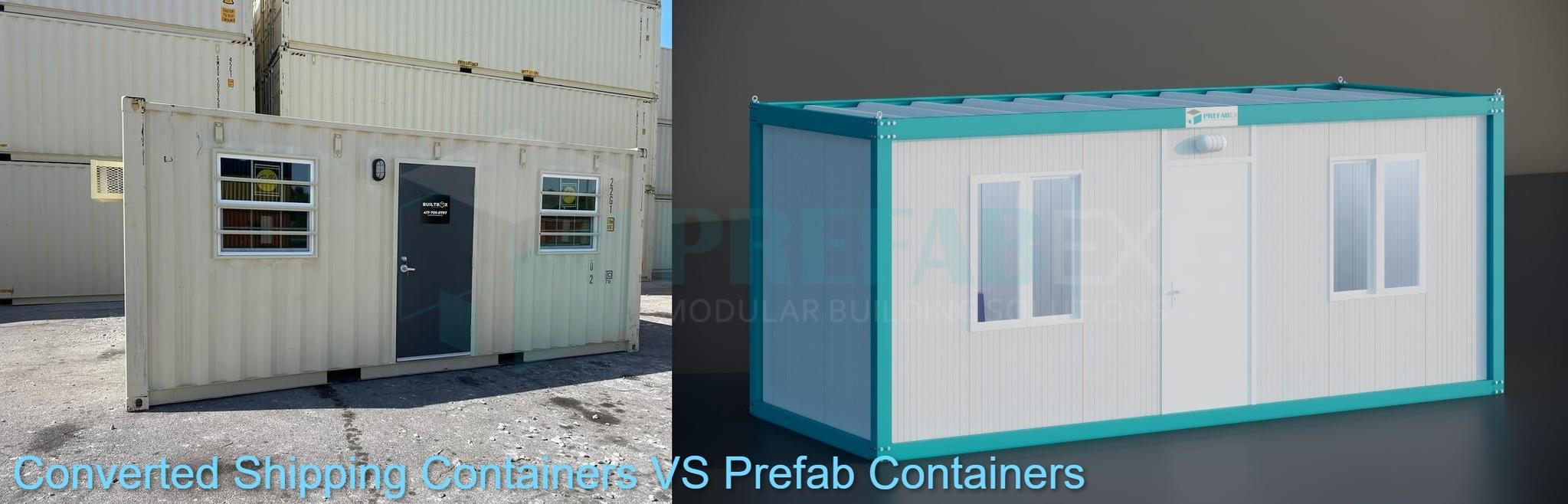
Prefabricated containers use components that are designed in a factory setting to serve as modular offices, homes or commercial spaces. Integrated with steel frames and insulated panels, these containers are scaled up with adaptability and comfort in mind. On the other hand, converted shipping containers are standard cargo containers that are repurposed by cutting openings, adding insulation and fitting interiors to fit into new structures.
Prefab containers are closely connected to modular containers, which are purpose-built for offices, accommodation, storage, sanitation, and project facilities instead of being converted from cargo use.

.jpg)
.jpg)
.jpg)


Construction and Design Differences
Prefab containers give architects and builders a fresh start with the ability to design any size or shape they want. These structures use space well and include things like insulation, air flow, water pipes, and electricity inside. On the contrary, shipping containers are 20 or 40 feet long with a set width and height, made for carrying goods. This means they cannot change much because adding windows or doors is harder as their original shape stays the same.
For a direct comparison with cargo-based units, flat pack vs traditional shipping containers explains the difference between flat-pack prefab systems and standard shipping containers.
Quality and Condition: New vs Used
Prefab containers are resistant to rust, dents, or damage. You can trust their strong structure because they are not used before. Used shipping containers can be different, but some have problems like rust or weak parts. These old containers may need many repairs before you can use them safely again. New prefab containers give you peace of mind because they are clean and strong from the initial.
Customization and Flexibility
Prefab containers are perfect for customization. Plumbing, heating and cooling systems, electrical wiring, and special interiors can be added to match any business or home need. Shipping containers that are changed into buildings have strong and hard shells, but they have some limits. Changing their structure can be expensive and hard to do while adding important systems later needs smart ideas to make them fit inside the old container shape.
To understand the broader difference, modular vs shipping containers compares purpose-built modular units with conventional cargo containers used in conversion projects.
Comparing Costs: Upfront and Long-Term
Prefab containers usually cost more at first because they use new materials and are custom-made. However, they can save money in the long run as they require less maintenance and last longer. In opposition, converted shipping containers are cheaper to buy at first as they use old containers which helps reduce costs. But there can be hidden costs later because they need repairs and upgrades.
Environmental Impact: Sustainability Considerations
Many buyers are requiring sustainable options for their build. Converted shipping containers are an eco-friendly solution because their structures can be used again without losing their costs. This in turn reduces waste generation and lowers their carbon footprint in comparison with other units.
Deployment Speed: Which Is Faster?
What makes prefab containers preferable for many is how speedy they are when it comes to the assembly. Being manufactured, they are delivered fully outfitted and ready to use. However, converted shipping containers would take longer times to be deployed because each part has to be assessed and modifications should be performed on site or at a retrofit facility. This results in general delays depending on many factors such as the complexity of the conversion.
Ideal Use Cases for Each Type
Prefabricated containers are considered a premium choice for those who want special spaces. Integrated with modern features and hasty preparations, these containers perfectly suit offices, clinics, classrooms, or homes that need specific designs. However, many choose converted shipping containers for projects that save money, like pop-up shops or art studios. They are also good for eco-friendly builds where recycling is important. These containers have a strong industrial look and can be used when design flexibility is not very important.
Regulatory and Zoning Challenges
Prefab containers and converted shipping containers have different rules to follow. Prefab containers are made in factories which means building codes are precisely met. On the other hand, converted shipping containers can be more complicated. Because they are used before, they may need extra checks and paperwork which makes it harder to get permission. Local laws and zoning rules can change how easy or hard it is to use these containers for new projects.
Prefabex is a Direct Manufacturer of Prefab Containers
Prefabex specializes in manufacturing high-quality prefab containers directly from our production facility, ensuring full control over design, materials, and quality. As a direct manufacturer, we eliminate middlemen, offering competitive pricing and faster delivery times.
Our prefab containers are engineered using galvanized steel frames and insulated sandwich panels, making them durable, weather-resistant, and easy to transport. Each unit is pre-assembled or supplied as a flat pack, ready for quick installation on-site.