 (1).png)
.png)
.jpg)
.png)
.png)
.jpg)
.png)
.png)
.png)
.jpg)
.png)
.jpg)
.jpg)
.png)
.png)
.jpg)
.png)
.png)
.jpg)
Steel vs. Sandwich Panels: Choosing the Right Materials for Security Cabins
Introduction: Material Choices That Define Durability and Safety
Security cabins, also called guard cabins or sentry boxes, are important for safety at construction sites, factories, campuses, and gated areas. They give security workers a safe and comfortable place to work. Though security cabins look simple, the materials used to build them affect how safe, strong, and comfortable they are. Two common materials for modern cabins are steel panels and sandwich panels. Each has different benefits for strength, insulation, cost, and use. Choosing between steel and sandwich panels depends on your climate, security needs, if the cabin moves often, and your budget. This article explains how these materials are made, where they work best, and what to think about before choosing.
Understanding the Role of Security Cabins
Before picking materials, it is important to know what security cabins do. They give workers a safe, comfortable, and useful place to work at entrances or checkpoints. These cabins often have communication tools, windows for watching outside, desks, and sometimes small electrical systems for light and cameras. Some cabins also have small rest areas or toilets for workers who stay a long time. Steel offers excellent structural strength and durability, making it ideal for withstanding harsh environmental conditions. Sandwich panel systems, which typically consist of two metal sheets bonded to an insulating core, provide superior thermal insulation and weather resistance. This combination ensures that outdoor installations remain sturdy, energy-efficient, and protected against the elements like temperature fluctuations, moisture, and corrosion. Together, these materials help maintain the integrity and performance of outdoor structures over time.
What Are Steel Security Cabins?
Steel security cabins are portable, robust structures designed for security personnel to monitor and control access in various environments, such as construction sites, warehouses, events, and parking facilities. These cabins are made from steel sheets joined to a strong frame. The steel covers the outside and sometimes the inside of the cabin. These cabins are very strong and safe. They do not get damaged easily by hits, vandalism, or bad weather. This makes them good for places like power plants, airports, ports, oil refineries, or military bases. You can also make steel cabins stronger to stop bullets or blasts if needed. But steel has some problems. It does not keep heat or sound inside well. This means steel cabins can be very hot in summer and very cold in winter if they have no extra layers to keep temperature and noise down. Still, if you want a cabin that lasts a long time and keeps people safe, steel cabins are one of the best choices.
What are Sandwich Panel Security Cabins?
Sandwich panel security cabins are portable structures designed for security purposes that utilize sandwich panel technology for their construction. These cabins are made from a special material with three layers. Two thin metal sheets, usually steel or aluminum, cover a middle layer that keeps heat and sound out. This middle layer can be made from materials like polyurethane, polystyrene, or rock wool. This makes the panels light but strong. The panels help keep the inside warm in winter and cool in summer. They also reduce noise. Sandwich panel cabins are often used for offices, homes, hospitals, and classrooms. For security cabins, they help guards stay comfortable in any weather and save energy. These cabins are quick to build and easy to move. They are good for places that change often, like construction sites or events.
Panel cabins are ideal when projects require insulated sandwich panel systems, flexible dimensions, fast installation, and practical security cabin layouts.
Comparing Steel vs. Sandwich Panels
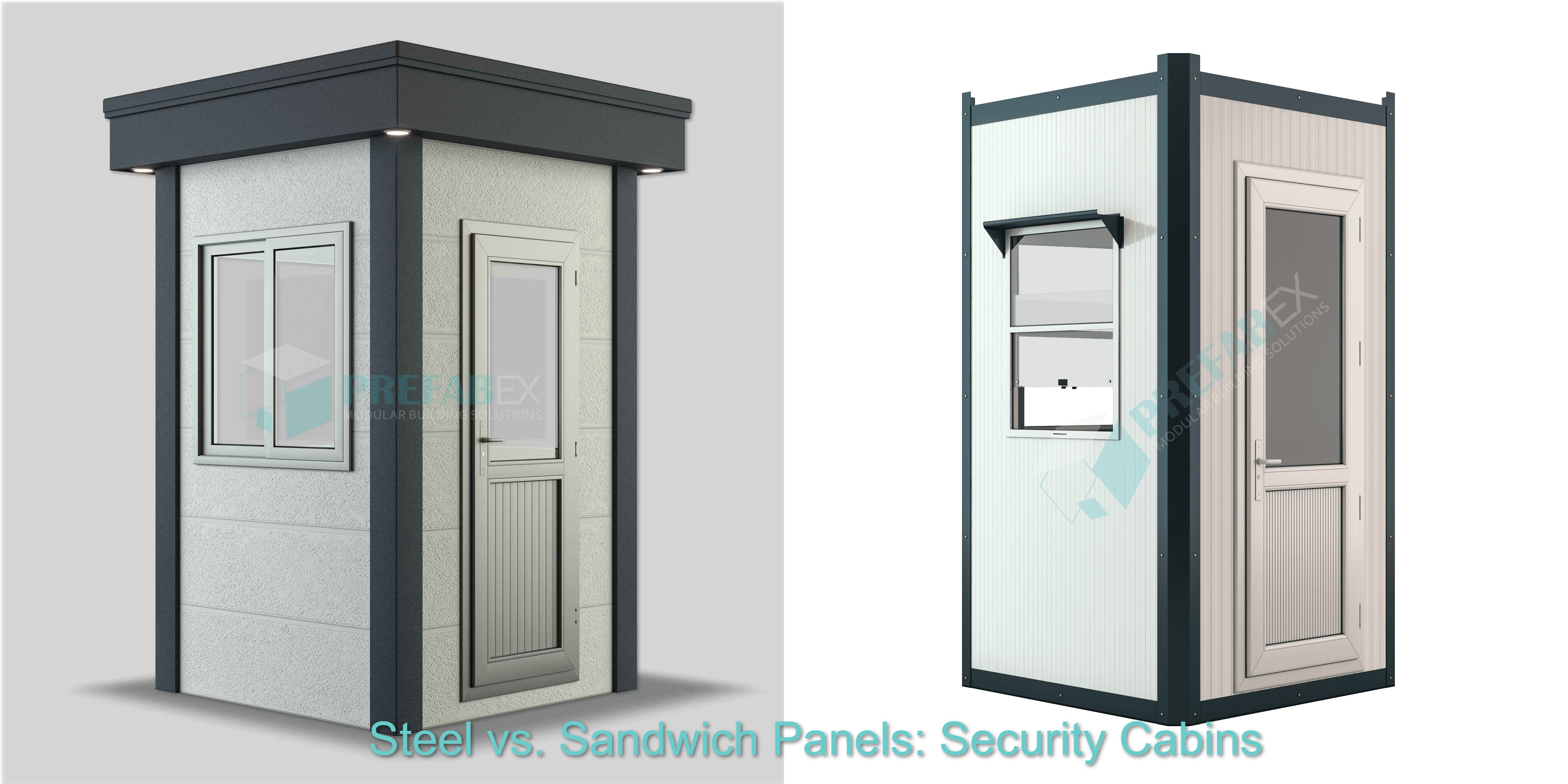
Steel and sandwich panels both work well, but they are good for different things. You can choose based on what is more important to you like safety, comfort, moving the cabin, or cost. Steel cabins are stronger. They protect better against damage and break-ins. For very secure places like oil storage, prisons, or government buildings, steel cabins are best. Sandwich panels are better for keeping the cabin warm or cool and quiet. This helps guards who have to sit in the cabin for many hours. Sandwich panel cabins weigh less and are easier to move. This makes them great for temporary places like building sites or outdoor events. Steel cabins are heavier and usually need cranes or special equipment for moving. Sandwich panel cabins are more affordable because they use less steel, involve less labor, and have modular designs that speed up installation. Steel cabins cost more upfront but provide superior durability and long-term reliability. Because of their robustness, steel cabins are better suited for permanent or high-security setups.
Thermal and Acoustic Performance
Thermal insulation is very important for a comfortable security cabin. In hot places, a steel cabin without insulation gets very hot. People need to use air conditioning all the time. In cold places, metal lets heat escape, so heating costs are high. Sandwich panel cabins fix this by having insulation inside the walls. The core made from materials like polyurethane or rock wool stops heat from moving. This keeps the cabin’s temperature steady and lowers the need for heating or cooling. Sandwich panels also help reduce noise. Security cabins are often near busy roads or gates. These panels make the cabin quieter inside. Steel cabins without extra soundproofing can be noisy. Sandwich panels give a quieter, more comfortable, and energy-saving space. Steel cabins need extra work to reach this comfort level.
Durability and Maintenance
Steel cabins last a very long time. Galvanized steel does not rust easily. It can resist hits, pests, and fire well. So, steel cabins are good for places where you want a strong, long-lasting building.
Sandwich panel cabins are strong but can get damaged if not handled carefully during transport or installation. Today, sandwich panels are better because of new ways to make and protect them. With good care, they last about 15 to 25 years. Cleaning sandwich panel cabins is easier. Their smooth surfaces do not get mold or mildew easily. Steel cabins may need painting or rust protection, especially in wet places.
Environmental and Sustainability Considerations
People care about the environment more now and steel and sandwich panels both help in different ways. Steel is 100% recyclable and can be reused many times without losing strength. It also works well with solar panels and other green energy systems. Sandwich panels save energy because they keep heat in or out. This lowers the need for heating and cooling. They often use eco-friendly insulation and produce little waste when made. Moreover, because sandwich panels are lighter and faster to build with, they cause less pollution during transport and installation.
Aesthetic and Design Flexibility
Both steel and sandwich panel cabins can look modern and professional. Steel cabins have a strong, simple, and tough look. This is good where you want to show strength and authority. Sandwich panel cabins are more flexible in design. They come in many colors, finishes, and textures. They can fit well in office areas, neighborhoods, or public places. Designers can add big windows, ventilation and nice internal finishes to make the cabin look good and feel comfortable.
Safety and Fire Resistance
Both steel and sandwich panels can meet high safety standards. Steel does not burn and can resist fire naturally. Sandwich panels can have fire-safe cores like rock wool or mineral wool, which protect well against fire. But if the panels have polyurethane or polystyrene cores, they are less fire-resistant unless they have special fireproof coatings. For places that need extra security or are dangerous, steel cabins may be safer because they handle impacts, heat, and chemicals better. Sandwich panel cabins are safe too but are best for general use where safety and comfort matter.
Which Material Should You Choose?
Choosing steel or sandwich panels depends on what you need. Steel cabins are strong and protect well. They are good for permanent sites, tough areas, or places with security risks. They last a long time and need little fixing. Sandwich panels are better for temporary or moving setups. They work well in cold or hot places because they keep the inside comfortable. They are light, save money, and use less energy. Many modern cabins use both materials: steel frames for strength and sandwich panels for walls and roofs. This mix grants both strength and comfort.
Building Smarter, Safer Spaces
The material in a security cabin is very important. It affects how well the cabin protects people, equipment, and property. Steel cabins stand for strength and last a long time. They are made for tough security needs. Sandwich panel cabins focus on comfort, easy movement, and saving energy. They suit groups that want good performance and care about the environment. Whether you want a cabin that is very strong or very comfortable, permanent or easy to move, today’s building methods can make cabins that fit your needs. In the future, many cabins will use both steel and sandwich panels to be strong and smart at the same time.
Prefabex is a Leading Manufacturer of Security Cabins
Prefabex is a leading manufacturer of security cabins constructed with high-strength steel and insulated sandwich panels. Our prefabricated security cabins are designed for durability, comfort, and practicality—ideal for use at construction sites, factories, parking areas, residential complexes, and access control points. Each unit is prefabricated for fast installation and equipped with windows, electrical fittings, insulation, and ventilation systems. Combining strength with sleek design, Prefabex modular security cabins ensure a safe, professional environment for guards and site personnel in any location.
Reliable Steel and Sandwich Panel Guard Cabins
Built to perform in all weather conditions, Prefabex’s modular security cabins offer a perfect balance of safety, mobility, and modern appearance. Our prefabricated designs use galvanized steel frames and insulated sandwich panels for long-lasting performance and thermal comfort. Fully customizable in size, layout, and finish, these cabins can include desks, lighting, air conditioning, and communication systems. Quick to deploy and easy to maintain, Prefabex’s security cabins provide trusted protection and functionality for every site and industry.
This unit is part of our panel cabins designed to meet specific project requirements.
.png)
.png)
.png)
.png)
.png)